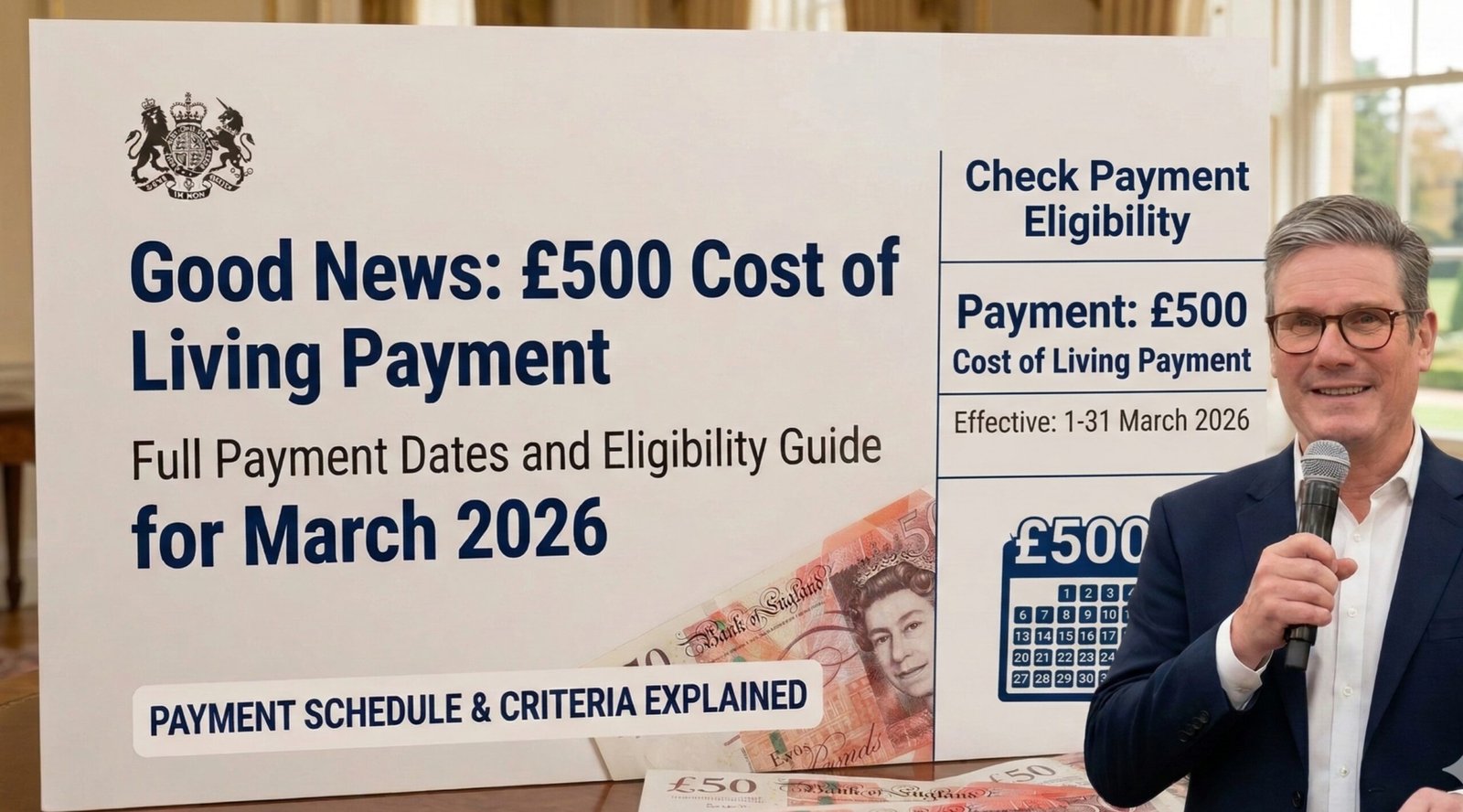
Across the United Kingdom, rising living costs have placed significant pressure on households, especially those with limited income. Energy bills, food prices and other everyday expenses continue to challenge many families. To provide additional financial support, the government has confirmed a new £250 Cost-of-Living payment scheduled for March 2026. The payment is aimed at helping vulnerable groups manage expenses as the country approaches the new financial year.
Government Announces £250 Cost-of-Living Payment
The rollout of the £250 payment has been organised by the Department for Work and Pensions in cooperation with HM Revenue and Customs. According to the announcement, payments will begin on 9 March 2026 and are expected to be completed by 27 March 2026. This three-week period was chosen so households can receive support before the Easter break and the start of the next financial year.
Eligible individuals do not need to apply for the payment. The funds will be transferred automatically to the bank account where people normally receive their benefit payments or pension. On bank statements, the payment will usually appear with a reference starting with “DWP COL” along with the recipient’s National Insurance number.

Who Is Eligible for the Payment
The payment is targeted toward people who were receiving certain benefits during a qualifying period between 1 January 2026 and 15 February 2026. Individuals receiving benefits such as Universal Credit, income-based Jobseeker’s Allowance, income-related Employment and Support Allowance, Income Support or Pension Credit may qualify.
People receiving Working Tax Credit or Child Tax Credit through HMRC are also expected to be included. Additionally, the payment covers individuals receiving disability benefits such as Personal Independence Payment, Disability Living Allowance or Attendance Allowance. However, households receiving more than one qualifying benefit will still receive only one £250 payment.
Extra Help Through Local Support Schemes
Alongside the national payment, local councils are continuing to distribute assistance through the Household Support Fund. This programme allows councils to provide help such as supermarket vouchers, fuel assistance or small emergency grants to households facing financial hardship but who may not qualify for the national payment.

These local programmes are intended to strengthen the financial safety net for households dealing with rising living costs.
Warning About Cost-of-Living Payment Scams
Authorities have warned that scammers often take advantage of public interest during benefit payment announcements. Fraudulent messages may claim that individuals need to click a link or confirm bank details to receive the £250 payment.
It is important to remember that the payment is automatic. Government departments will not ask for personal or banking information through unsolicited messages related to this payment.

Importance of the March Support Payment
The £250 payment is expected to provide temporary financial relief for millions of households as they deal with the lingering effects of winter energy costs and rising bills. While it may not solve long-term financial challenges, it can help cover essential expenses during a particularly expensive period of the year.
Disclaimer: This article is for informational purposes only and summarizes publicly available information about UK cost-of-living support. Eligibility, payment schedules and benefit rules may change. Individuals should consult official government websites or relevant authorities for the most accurate and updated information regarding payments and benefits.