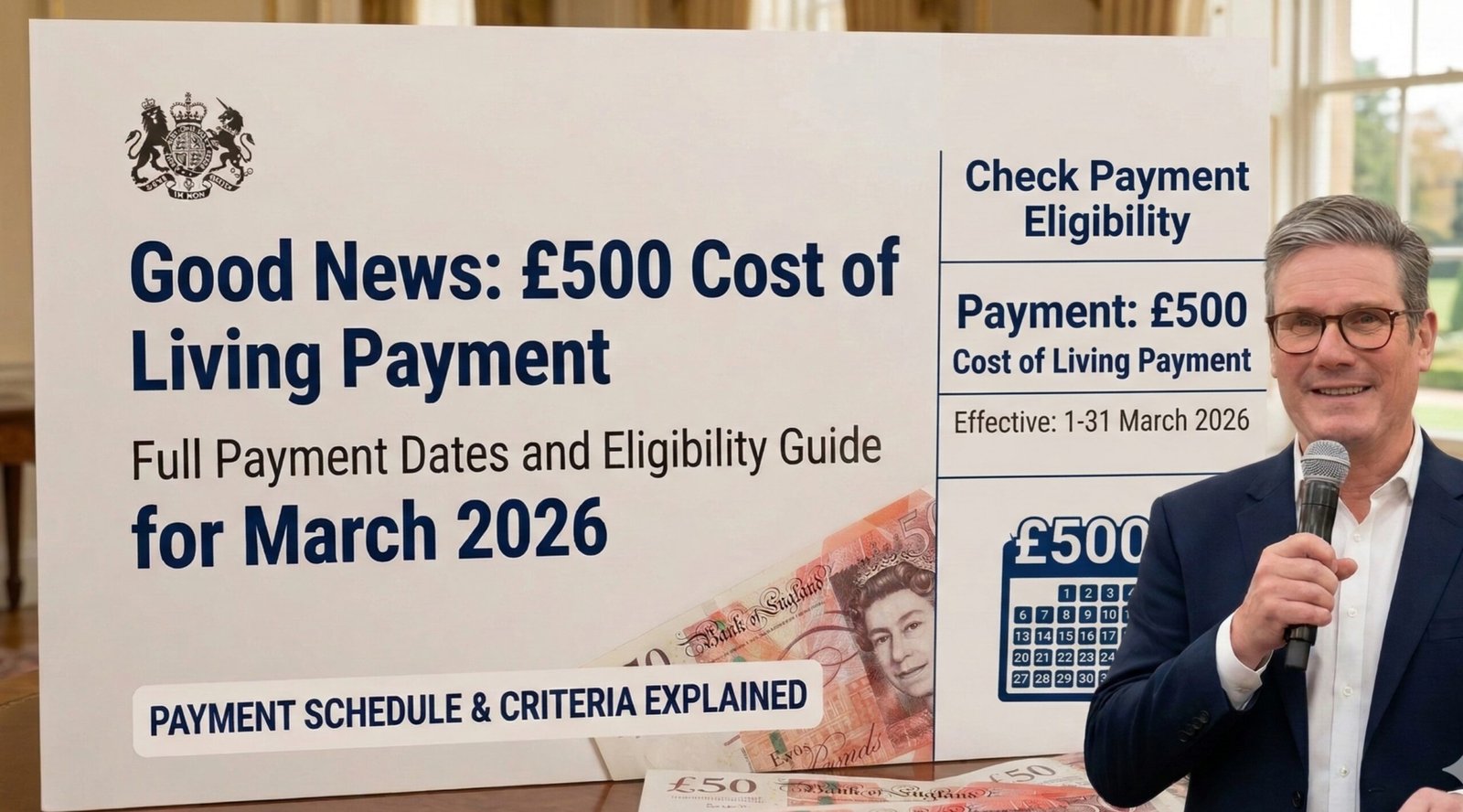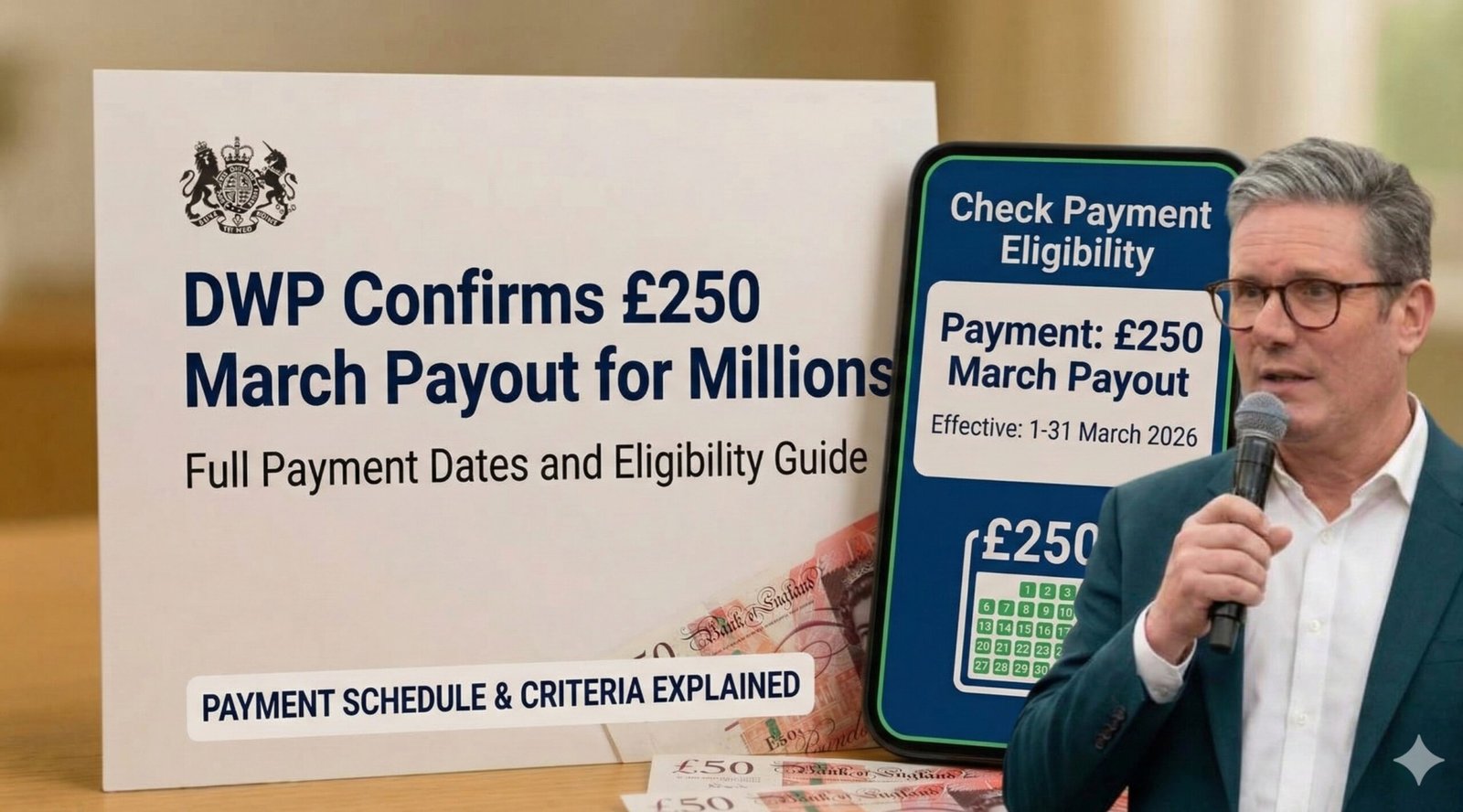
Across the United Kingdom, the rising cost of everyday living has placed significant pressure on many households, especially those relying on government support. Energy bills, food prices and other basic expenses have increased over the past few years, making it harder for families and pensioners to manage their finances. To provide additional relief, the government has announced a £250 Cost-of-Living payment scheduled for March 2026. This targeted financial support aims to help vulnerable households cope with ongoing economic challenges.
Government Confirms March 2026 Payment Window
The payment programme is being coordinated by the Department for Work and Pensions in partnership with HM Revenue and Customs. According to the announcement, payments will begin on 9 March 2026 and are expected to continue until 27 March 2026. The rollout has been scheduled before the Easter period so that eligible households receive the support quickly.
Recipients do not need to submit an application to receive the payment. The money will be deposited automatically into the same bank account where individuals normally receive their benefits or pension payments. Bank statements may show a payment reference that starts with “DWP COL,” followed by the recipient’s National Insurance number.

Who May Qualify for the £250 Support
Eligibility for the payment is linked to certain benefits received during a qualifying period between 1 January 2026 and 15 February 2026. People receiving benefits such as Universal Credit, income-based Jobseeker’s Allowance, income-related Employment and Support Allowance, Income Support or Pension Credit are likely to qualify.
Those receiving tax credits through HMRC, including Working Tax Credit or Child Tax Credit, may also be included. In addition, individuals receiving disability-related benefits such as Personal Independence Payment, Disability Living Allowance or Attendance Allowance are expected to be covered by the scheme. The payment is designed to support people who often face higher living costs or limited income.
How the Payment System Works
The government has clarified that each eligible household will receive one £250 payment. Even if someone receives multiple qualifying benefits, the system is structured to ensure only a single payment is issued per household. This approach helps spread financial assistance across a wider number of families.

The payment is tax-free and will not affect existing benefits. It will not count as income when calculating benefit entitlements, meaning recipients will continue receiving their regular support without reductions.
Support for Households Facing Financial Pressure
In addition to the national payment, local councils may provide extra assistance through the Household Support Fund. This fund allows councils to offer help such as supermarket vouchers, emergency grants or support with fuel costs for residents facing financial hardship.
The £250 payment is intended to provide temporary financial relief as the country moves toward the next financial year. For many households, it may help cover essential costs such as heating bills, groceries or council tax.

Disclaimer: This article is for informational purposes only and summarizes publicly discussed government support measures. It does not represent official confirmation of eligibility or payment status. Individuals should check official government websites or contact relevant authorities for the most accurate and up-to-date information regarding benefits and payments.