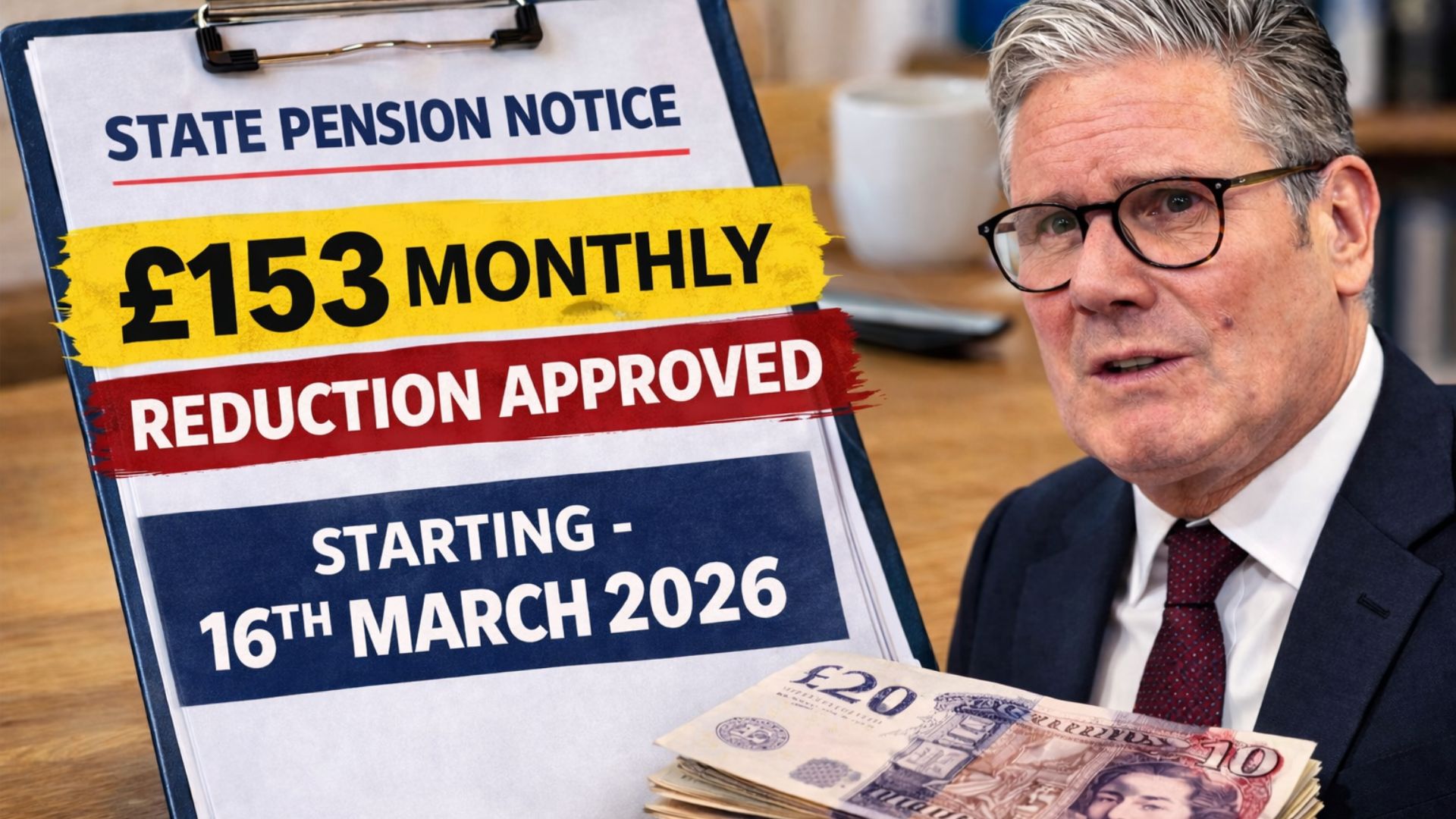
Recent news about a possible £153 monthly reduction in the UK State Pension has created concern among many retirees. With living costs still high, the idea of a cut to pension income can be worrying for people who rely on this support to cover everyday expenses. However, it is important to understand that this reported reduction is not a general decrease in the State Pension. Instead, it relates to specific financial adjustments that may affect certain individuals depending on their circumstances.
Understanding the £153 Pension Adjustment
The £153 figure mentioned in recent reports does not represent a nationwide reduction in pension payments. The base amount of the State Pension has not been reduced by the government. In fact, the pension is scheduled to increase again in April 2026 under the Triple Lock system.
The amount of £153 mainly relates to deductions that may occur when the Department for Work and Pensions recovers previous overpayments or adjusts benefits after a review. These deductions are applied only in specific cases where individuals have received more money than they were entitled to in the past or where benefit calculations have changed.
Why Some Pensioners May See Lower Payments
One reason some retirees may notice a reduction in their monthly income is due to tax adjustments. The State Pension counts as taxable income, but tax is not usually deducted directly from the pension payment. Instead, tax is often collected through adjustments to other income sources or tax codes.
Because the personal tax allowance has remained frozen at £12,570, some pensioners who also receive private pensions or other income may cross the taxable threshold. When this happens, HM Revenue and Customs may adjust tax codes to collect the correct amount of tax, which can reduce the net income received each month.
Pension Credit Recalculations
Another factor behind payment changes is the review of Pension Credit. This benefit helps increase the income of pensioners with lower financial resources. Since Pension Credit is means-tested, even small increases in savings income or private pensions may lead to a recalculation.

When income increases slightly, the benefit amount may decrease accordingly. This adjustment can sometimes make it appear as though overall support has been reduced.
Future Increase in State Pension Payments
Despite the recent concerns, the State Pension is expected to increase again from April 2026. The confirmed rise of around 4.8 percent will increase the full new State Pension to approximately £241.30 per week. The basic State Pension will also rise to around £184.90 per week.
This increase is intended to help pensioners keep up with rising living costs and maintain financial stability during retirement.

Overview of Key Pension Payment Factors
| Factor Affecting Payment | Explanation |
|---|---|
| Overpayment Recovery | Deductions used to repay previous overpaid benefits |
| Tax Code Adjustments | Changes due to taxable pension income |
| Pension Credit Reviews | Income changes affecting means-tested benefits |
| Triple Lock Increase | Annual rise in State Pension payments |
| April 2026 Pension Rates | Higher weekly pension payments expected |
Staying Informed About Pension Changes
Pensioners who notice changes in their payments should review their tax codes or contact the Pension Service for clarification. Keeping financial records updated and informing the Department for Work and Pensions about changes in circumstances can help avoid unexpected adjustments.
Although the headlines about a £153 reduction may appear alarming, most pensioners will continue receiving their full pension entitlement, with many seeing higher payments once the annual increase takes effect.
Disclaimer
This article is for informational purposes only. Pension rules, tax policies, and benefit calculations may change based on official government decisions. Individuals should verify their personal payment details through official government sources or contact the relevant authorities for accurate guidance.