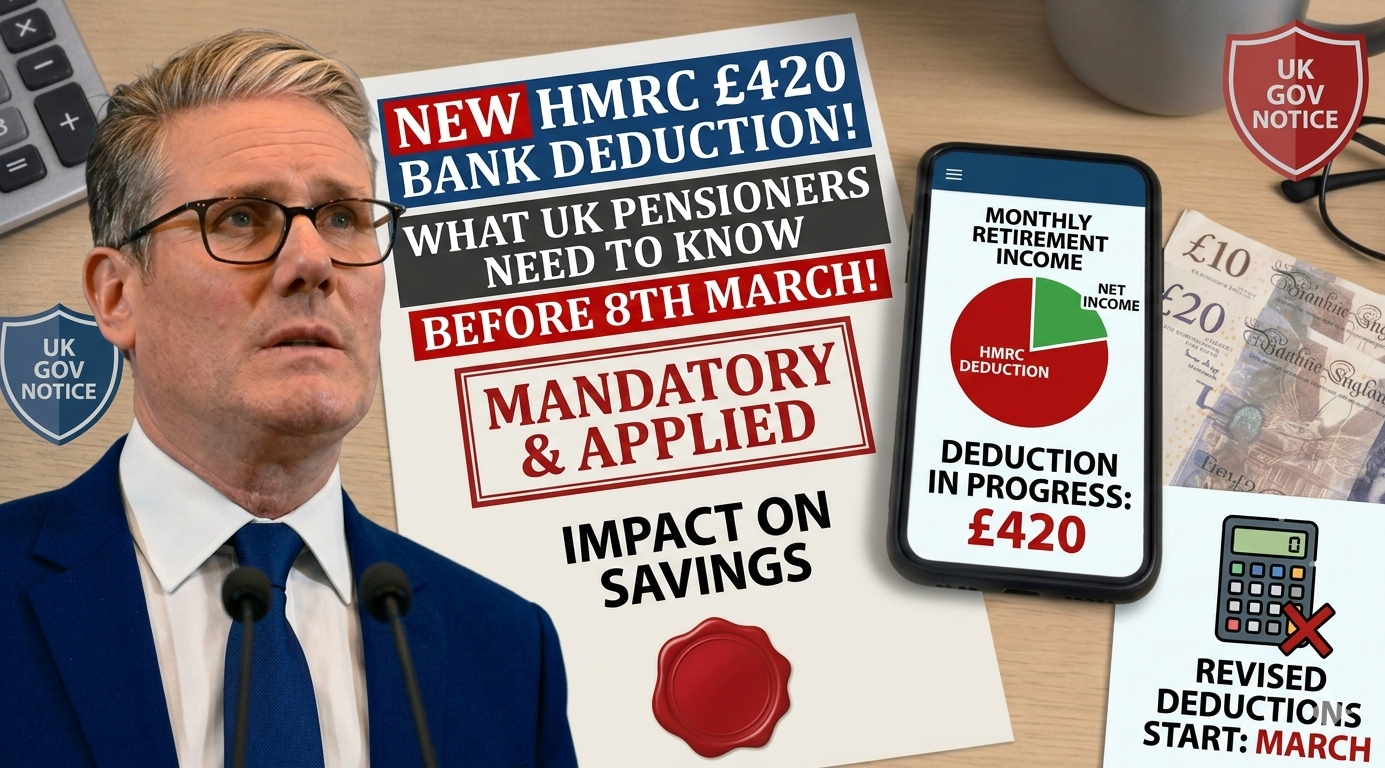
Across the United Kingdom, many pensioners are paying closer attention to their tax records after reports about a possible £420 deduction connected to tax adjustments. As the financial year approaches its end, discussions about this deduction have raised concerns among retirees who rely on fixed incomes. However, the reported £420 amount is not a new tax specifically for pensioners. In most cases, it relates to adjustments made by tax authorities when previous tax payments have been calculated incorrectly.
Why the £420 Deduction Is Being Discussed
The reported deduction is mainly linked to tax adjustments carried out by HM Revenue and Customs. These adjustments often occur when a person has underpaid tax during the previous year. Instead of charging a separate penalty, HMRC usually updates a person’s tax code so that the unpaid amount is gradually recovered through future payments.
For pensioners who receive income from several sources, such as a private pension alongside the State Pension, small differences in tax calculations can result in an underpayment. When this happens, HMRC may adjust the tax code so that the missing tax is recovered over time. In many cases, the total adjustment across a year can be close to £420.
Impact of the Frozen Personal Allowance
Another factor behind the issue is the continued freeze on the personal tax allowance. The tax-free threshold has remained at £12,570 for several years. During the same period, pension payments have increased due to policies such as the Triple Lock.
Because of this situation, some pensioners who previously paid little or no tax may now have income that exceeds the allowance. When this happens, HMRC may send a “simple assessment” notice showing how much tax is owed. This process allows the tax authority to calculate a tax bill based on information received from pension providers and banks.
Interest Income and Tax Adjustments
Savings interest can also lead to tax adjustments. Many people receive interest on their savings accounts, and banks now share this information directly with HMRC. If interest earnings exceed the allowed tax-free amount, additional tax may apply.

When HMRC identifies such income, it may change a person’s tax code so the owed tax is collected gradually through future pension payments.
Understanding Tax Code Changes
Most taxpayers have the standard tax code 1257L, which represents the current personal allowance. If a pensioner’s tax code changes to a different number or includes letters such as “K,” it may indicate that HMRC has adjusted the code to recover unpaid tax.
The following table explains some common reasons why a deduction or tax adjustment might appear.

| Possible Reason | Explanation |
|---|---|
| Tax Underpayment | Previous tax year income was not taxed correctly |
| Multiple Income Sources | Income from pensions or savings increased total taxable income |
| Savings Interest | Interest earnings exceeded the tax-free allowance |
| Tax Code Adjustment | HMRC changed the tax code to recover unpaid tax |
Importance of Checking Tax Records
Pensioners are encouraged to review their tax codes and financial records regularly. Checking tax information through official online accounts can help ensure that income details are correct and prevent unexpected deductions. If an adjustment appears incorrect, individuals can contact HMRC to request a review.
Understanding how tax codes work can help retirees manage their finances more confidently and avoid confusion about deductions.
Disclaimer: This article is for informational purposes only and does not provide financial or tax advice. Tax rules, allowances and deductions may change over time. Individuals should consult official government sources or a qualified financial adviser for the most accurate and updated information regarding their personal tax situation.