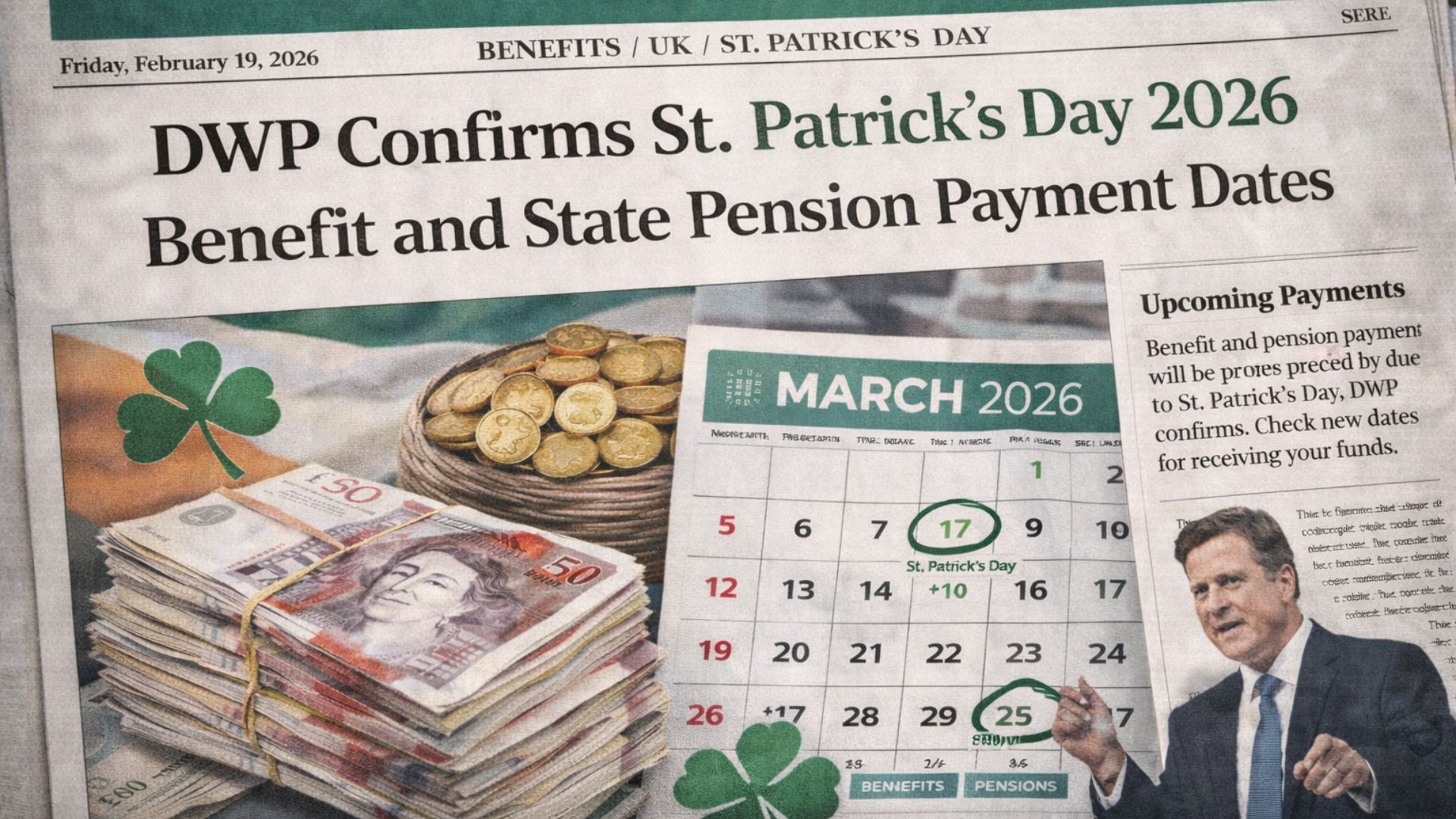
Millions of people in the United Kingdom receive financial support from the Department for Work and Pensions. These payments include the State Pension, Universal Credit, and several disability benefits. For March 2026, the government has confirmed an important update to the payment schedule because of the St. Patrick’s Day bank holiday in Northern Ireland. Understanding these changes is important for claimants so they can plan their finances and know exactly when their money will arrive.
Bank Holiday Impact on DWP Payments
In the UK, when a benefit payment date falls on a bank holiday, the payment is usually sent earlier. The money is normally deposited on the last working day before the holiday so that recipients are not left without funds.
St. Patrick’s Day falls on Tuesday, March 17, 2026. This day is a public bank holiday in Northern Ireland but not in England, Scotland, or Wales. Because of this difference, payment schedules will vary depending on where the claimant lives.

For people living in Northern Ireland whose payment was due on March 17, the Department for Work and Pensions has confirmed that the money will be paid on Monday, March 16 instead. In some cases, depending on the bank’s processing time, the payment could appear even earlier in the account.
Regions Where Payments Will Remain Unchanged
The bank holiday only affects Northern Ireland. In England, Scotland, and Wales, March 17 is treated as a normal working day. This means that claimants in these regions will receive their payments on the regular scheduled date without any early changes.
People who have recently moved between regions should double check which payment schedule applies to them. Knowing the correct date helps avoid confusion when checking bank accounts.

Benefits Included in the Payment Adjustment
The payment date change applies to a wide range of benefits managed by the Department for Work and Pensions. These include the State Pension, Universal Credit, Personal Independence Payment, Disability Living Allowance, Attendance Allowance, Carer’s Allowance, Jobseeker’s Allowance, and Employment and Support Allowance.
Although the payment date may change, the amount of the benefit itself will remain the same during this period. The major increase in pension and benefit rates is expected to begin from April 2026.
Additional Payment Updates in March 2026
March also includes the rollout of a special one-off payment for certain pensioners. A £531 support payment is scheduled to begin distribution from March 8, 2026. This payment is intended to help elderly households manage rising living costs and will usually be deposited automatically into eligible bank accounts.

Some payments handled by HM Revenue and Customs may follow slightly different schedules. For example, Child Benefit payments due on March 17 in Northern Ireland are expected to arrive on March 18 instead.
Key March 2026 Payment Dates
| Event | Date | Details |
|---|---|---|
| One-off pensioner payment begins | March 8, 2026 | £531 support payment for eligible pensioners |
| Early payment for NI claimants | March 16, 2026 | Payments due on March 17 moved earlier |
| St. Patrick’s Day | March 17, 2026 | Bank holiday in Northern Ireland |
| Child Benefit adjustment (NI only) | March 18, 2026 | Payment delayed by one day |
| Legacy benefit transition deadline | March 31, 2026 | Final migration to Universal Credit |
Conclusion
The March 2026 payment schedule highlights how bank holidays can affect benefit payments in certain parts of the United Kingdom. While the change mainly affects Northern Ireland due to the St. Patrick’s Day holiday, most other regions will see payments arrive on their usual dates. By keeping track of these updated schedules, claimants can plan their household budgets more effectively and avoid confusion when checking their bank accounts.
Disclaimer
This article is for informational purposes only. Payment dates, benefit amounts, and eligibility conditions may change depending on official government announcements. Individuals should check their personal benefit statements or official government sources to confirm their exact payment details.